
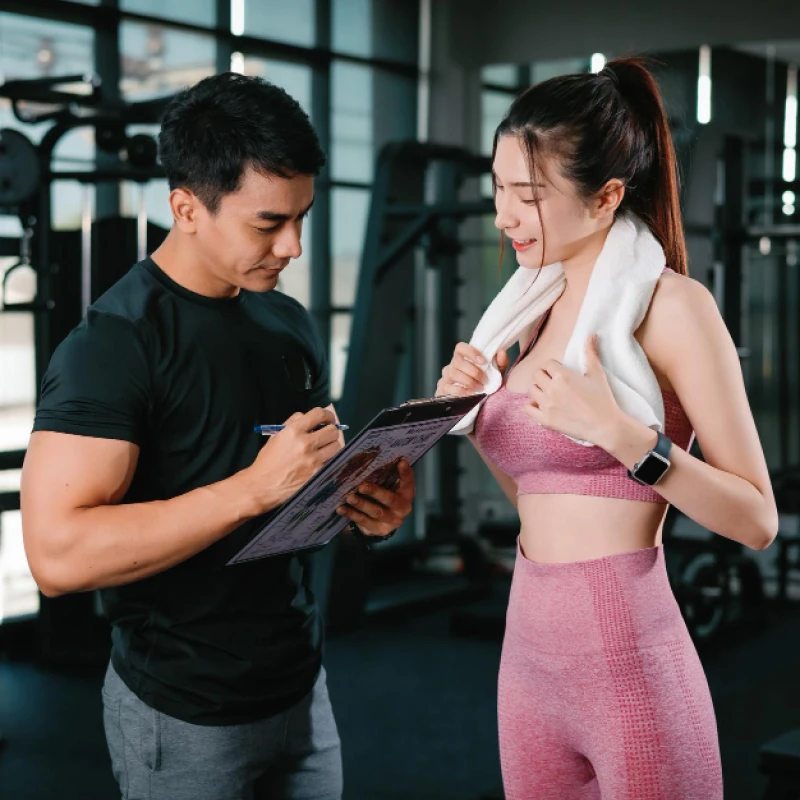
How to become a fitness coach? To become a professional fitness coach, you need more than just exercise knowledge — you must know how to guide clients and help them solve every challenge they encounter during their fitness journey. This article will help you understand the preparation needed to become a fitness coach, salary expectations, frequently asked questions, and future career development paths.
1. What Does a Fitness Coach Do?
A fitness coach's job is to help clients create tailored exercise plans suited to their intensity level and needs, guiding them toward their fitness goals.
Training sessions may include fat loss, muscle building, and improving physical fitness to enhance overall health. Coaches also need to observe clients' movements and exercise form to ensure correct posture and prevent injuries.
Additionally, a fitness coach's responsibilities include helping clients build healthy eating habits, teaching pre- and post-workout fascia release techniques, tracking and measuring body metrics (commonly known as InBody assessments), and regularly evaluating clients' progress and physique to adjust training programs for optimal results.
2. Essential Qualities of a Fitness Coach

💡 Strong Communication Skills
Fitness coaches need to interact with clients from various backgrounds and age groups, understand their fitness needs and goals, and explain exercises in simple, easy-to-understand ways. Whether prospecting for new clients or conducting actual training sessions, extensive communication is required. Therefore, making clients willing to listen and trust you is a crucial trait — without client trust or the ability to successfully sell your services, even the best professional skills or physique won't matter!
💡 Patience and Empathy
During fitness training, everyone progresses and learns at different speeds. Coaches need to provide patient guidance with empathy, helping clients learn in a comfortable and effective manner.
💡 Professional Knowledge and Experience
To become a professional fitness coach, beyond basic knowledge — including studying anatomy, kinesiology, exercise physiology, and biomechanics — personal training and teaching experience are also extremely important. Only by doing it yourself will you understand what challenges may arise during the learning process!
💡 Continuous Learning Ability
In today's rapidly evolving information age, knowledge and concepts change at an incredible pace. Fitness coaches must stay current by learning new knowledge and training methods, continuously attending workshops and obtaining relevant certifications to solve their clients' various challenges.
💡 Self-Discipline and Time Management
Beyond teaching hours, coaches also need to allocate time for client development, and even reserve time for their own workouts. Therefore, fitness coaches themselves must possess excellent time management skills.
3. Do I Need a Related Degree? Are Certifications Required?
Many people ask, "Do fitness coaches need a related academic background?" However, more than a degree, becoming a fitness coach requires practical teaching and training experience. You can also obtain relevant certifications — while Taiwan doesn't have mandatory certification requirements for fitness coaches, earning certifications can enhance your professionalism and credibility.
The most entry-level and widely recognized fitness coach certification in Taiwan is the "Physical Fitness Instructor Level C" course offered by the Chinese Taipei Exercise & Health Association. Most people looking to enter the fitness coaching industry start by obtaining this certification.
Common international fitness coach certifications include:
- ACE (American Council on Exercise)
- NASM (National Academy of Sports Medicine)
- NSCA (National Strength and Conditioning Association)
- ACSM (American College of Sports Medicine)
Beyond the certifications mentioned above, you can also obtain additional specialized certifications based on your workplace or needs, such as nutrition, yoga, TRX suspension training, kettlebell, and myofascial release certifications.
4. Where Can Fitness Coaches Work? Is the Income Stable?
Common workplace options for fitness coaches can generally be divided into the following three types, with varying salary structures and income levels:
(1) Gym-Based Coach
Working as a coach at a chain gym or private fitness studio offers relatively stable work with higher client traffic and ample opportunities to develop your sales skills, without worrying about finding clients. Salary typically consists of a base pay plus class hours plus contract commissions. Additionally, some chain gyms offer regular training programs and certification subsidies, making this option ideal for those just entering the fitness coaching industry.
(2) Community Sports Center Coach
You can also work as a fitness coach or sports instructor at a community sports center, where you may have more opportunities to work with elderly or youth clients. The salary is generally a fixed base pay, so compared to gym-based fitness coaches, you won't need to worry much about meeting sales targets.
(3) Freelance Coach
As a freelance coach, your workplace has no limitations — it entirely depends on the nature of your assignments. While freelance coaches don't have commission deductions, they need the ability to develop their own client base. Income depends on the number of clients and pricing, and you'll also need to arrange your own training venue.
Notably, with the rise of digital technology, some fitness coaches offer online private training or course consultations, which is also an excellent work model to consider.
⚠️ The above information is for reference only. Salary structures and characteristics may vary depending on the specific organization or workplace.
5. Future Career Development for Fitness Coaches
Fitness coaches have diverse career development paths. As teaching experience and professional knowledge accumulate, coaches can consider:
- Building a Personal Brand: Experienced coaches may choose to open their own studio or fitness center, gaining greater business autonomy.
- Becoming a Fitness Instructor or Mentor: Fitness coaches can transition into instructor or mentor roles, helping other coaches achieve further growth.
- Pursuing Digital Development: With the rise of social media and online courses, fitness coaches can leverage digital platforms to expand their influence, and even develop fitness apps.
- Becoming a Fitness Influencer: There are many fitness celebrities online today. Whether through creating your own video channel or becoming a well-known professional athlete, as long as you have an audience, there are opportunities for brand endorsements. Long-term endorsement deals can generate substantial income.
6. Do Fitness Coaches Need to File Taxes?
As a fitness coach, if you work for a fitness company, you are required to file taxes according to the law. However, if you work as a private trainer and only collect cash without filing taxes, you may face a lack of income proof, which could affect future investment or loan applications.
Trainge offers services including courses (in-person & online), venue rentals, and product sales. Becoming a Trainge partner can meet your various marketing needs and provide you with income documentation, resolving concerns related to asset declarations.
That covers everything you need to know about becoming a fitness coach. We hope this guide answers your questions — click the button below to learn more!
Become a Trainge Partner